
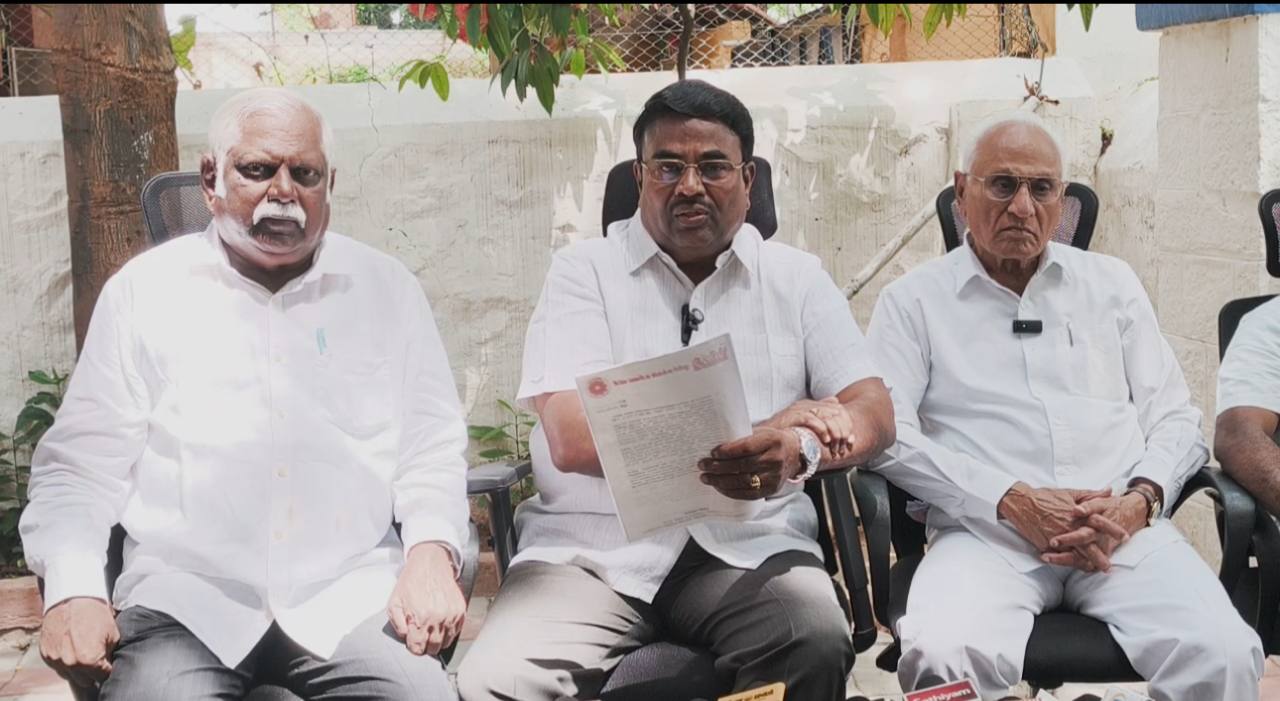
Speaking at a press conference in Coimbatore, Party for the Rights of OBCs president V. Rathinasabapathy warned that any move by the Tamil Nadu government to grant exclusive reservation to the Vanniyar community would trigger strong opposition from 251 Backward Class and Most Backward Class communities across the State.
Coimbatore: Party for the Rights of OBCs president V. Rathinasabapathy on Monday warned that the Tamil Nadu government would face stiff resistance from 251 communities if it proceeded with any proposal to provide exclusive reservation for the Vanniyar community.
Addressing reporters in Coimbatore, he alleged that recent discussions surrounding caste-based enumeration and internal reservation were being driven by political considerations rather than objective data and constitutional principles.
Referring to a recent all-community meeting convened in Chennai by PMK president Anbumani Ramadoss, Rathinasabapathy claimed that several communities were either not invited or had chosen to stay away from the deliberations. He further alleged that organisations and communities that had challenged the 10.5 per cent Vanniyar internal reservation before the courts had been sidelined.
He claimed that the meeting, ostensibly convened to deliberate on caste-based enumeration, primarily focused on the demand for exclusive reservation for the Vanniyar community. According to him, seeking reservation solely on the basis of population statistics runs contrary to constitutional provisions and the legal principles underpinning affirmative action.
He also alleged that certain senior leaders in the ruling party were exploring the possibility of granting exclusive reservation to the Vanniyar community for political gains. Expressing concern over the issue, he said the demand could be considered during the ongoing Assembly session in view of evolving political equations.
Maintaining that Tamil Nadu is home to 252 Backward Class and Most Backward Class communities, Rathinasabapathy said extending exclusive reservation to a single community would be inequitable. He accused political leaders from the Vanniyar community of pursuing the issue primarily for electoral advantage.
Calling for a comprehensive caste-based survey in Tamil Nadu, he urged the State government to publish empirical data on representation in government employment, higher education, entrepreneurship and access to welfare schemes across communities, similar to exercises undertaken in states such as Karnataka and Andhra Pradesh.
Reservation policies, he said, should be framed only on the basis of credible data identifying genuinely underrepresented groups rather than political expediency.
He further stated that representations had been submitted seeking appointments with the Chief Minister and the Minister for Backward Classes Welfare to present the party’s concerns on the issue.
Warning against any move to introduce exclusive reservation for a single community, Rathinasabapathy said the Party for the Rights of OBCs, along with members of the 251 affected communities, would launch strong protests across Tamil Nadu if such a decision was taken.
He also urged the State government to fill existing vacancies in various departments without delay and sought an enhancement of the annual income ceiling for scholarships available to Backward Class students from the current ₹2.5 lakh to ₹8 lakh, in line with the threshold adopted by the Union government.
Addressing reporters in Coimbatore, he alleged that recent discussions surrounding caste-based enumeration and internal reservation were being driven by political considerations rather than objective data and constitutional principles.
Referring to a recent all-community meeting convened in Chennai by PMK president Anbumani Ramadoss, Rathinasabapathy claimed that several communities were either not invited or had chosen to stay away from the deliberations. He further alleged that organisations and communities that had challenged the 10.5 per cent Vanniyar internal reservation before the courts had been sidelined.
He claimed that the meeting, ostensibly convened to deliberate on caste-based enumeration, primarily focused on the demand for exclusive reservation for the Vanniyar community. According to him, seeking reservation solely on the basis of population statistics runs contrary to constitutional provisions and the legal principles underpinning affirmative action.
He also alleged that certain senior leaders in the ruling party were exploring the possibility of granting exclusive reservation to the Vanniyar community for political gains. Expressing concern over the issue, he said the demand could be considered during the ongoing Assembly session in view of evolving political equations.
Maintaining that Tamil Nadu is home to 252 Backward Class and Most Backward Class communities, Rathinasabapathy said extending exclusive reservation to a single community would be inequitable. He accused political leaders from the Vanniyar community of pursuing the issue primarily for electoral advantage.
Calling for a comprehensive caste-based survey in Tamil Nadu, he urged the State government to publish empirical data on representation in government employment, higher education, entrepreneurship and access to welfare schemes across communities, similar to exercises undertaken in states such as Karnataka and Andhra Pradesh.
Reservation policies, he said, should be framed only on the basis of credible data identifying genuinely underrepresented groups rather than political expediency.
He further stated that representations had been submitted seeking appointments with the Chief Minister and the Minister for Backward Classes Welfare to present the party’s concerns on the issue.
Warning against any move to introduce exclusive reservation for a single community, Rathinasabapathy said the Party for the Rights of OBCs, along with members of the 251 affected communities, would launch strong protests across Tamil Nadu if such a decision was taken.
He also urged the State government to fill existing vacancies in various departments without delay and sought an enhancement of the annual income ceiling for scholarships available to Backward Class students from the current ₹2.5 lakh to ₹8 lakh, in line with the threshold adopted by the Union government.